Background and Objectives
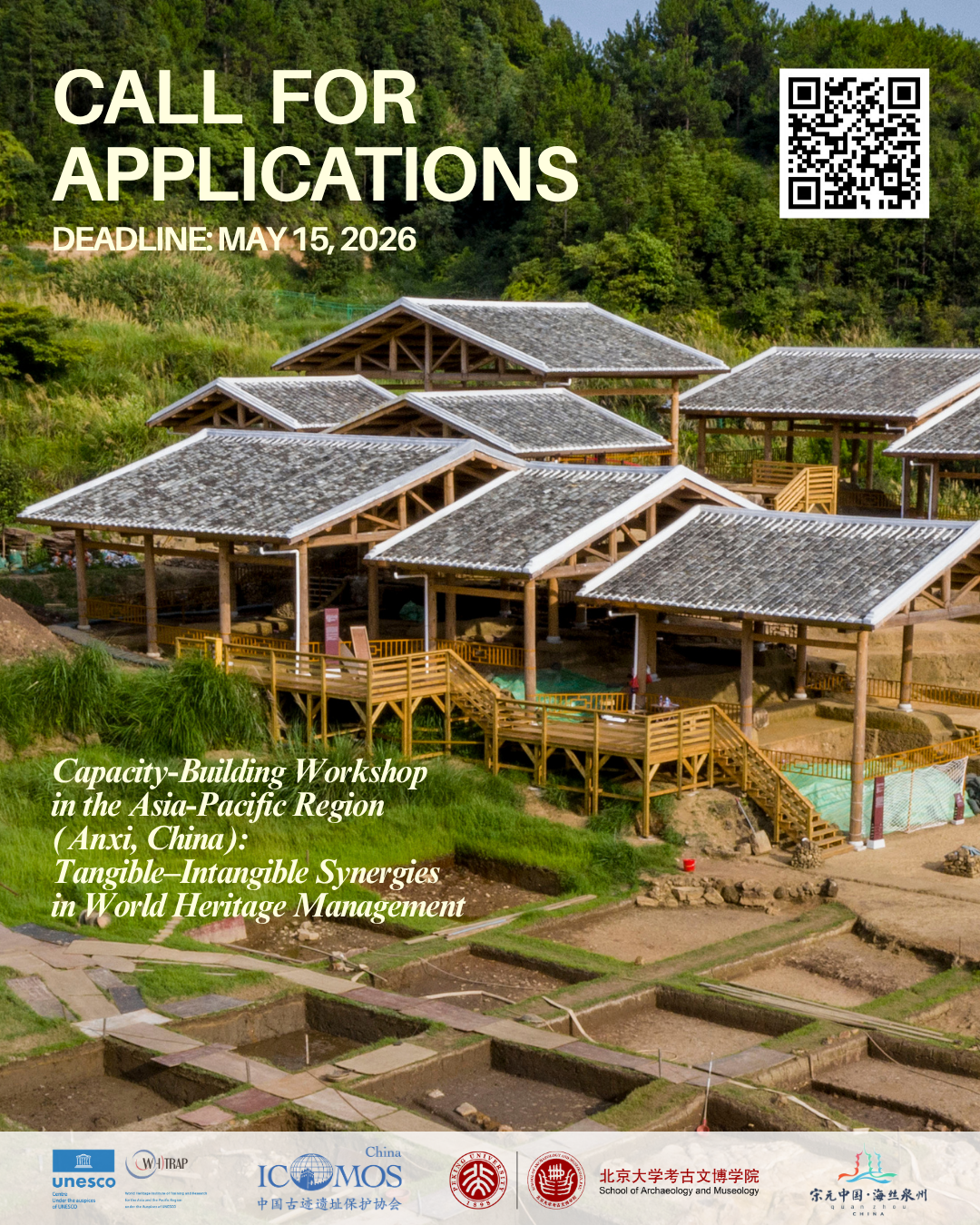
Over fifty years since the adoption of the 1972 World Heritage Convention, the global conservation paradigm has shifted increasingly toward integrated, people-centred approaches. From the 2003 Convention for the Safeguarding of the Intangible Cultural Heritage to the 2025 ICOMOS Charter on Intangible Cultural Heritage at Heritage Sites, there is a growing mandate for equal attention to both physical fabric and living traditions. However, a "management divide" persists in practice. In the Asia-Pacific region, where many World Heritage properties embody complex cultural ecosystems with deeply intertwined tangible and intangible elements, bridging this divide is especially urgent.Building on the foundations of the 2024 and 2025 workshops, WHITR-AP Beijing and its partners will host the Capacity-Building Workshop in the Asia-Pacific Region: Tangible–Intangible Synergies in World Heritage Management in Anxi, China, in August 2026.Anxi is home to diverse heritage resources, including components of "Quanzhou: Emporium of the World in Song-Yuan China" (World Cultural Heritage), "Traditional tea processing techniques and associated social practices in China" (Intangible Cultural Heritage of Humanity), and the "Anxi Tieguanyin Tea Cultural System" (Globally Important Agricultural Heritage System). Through lectures, field studies, and group projects, the workshop will empower participants to move beyond theoretical frameworks and develop practical, integrated management strategies for their respective sites.
Expected Outcomes
Integrated Value Identification: Mastery of attribute definition, nomination principles, and value identification for both tangible and intangible heritage.Management Practice Insights: Deepened understanding of challenges in heritage planning and monitoring, with tools to bridge the tangible-intangible divide.Sustainable Pathways: Skills to integrate ICH elements into sustainable management models driven by community participation.Cross-Regional Network: Connection with a professional network across the Asia-Pacific to foster resource sharing and collaboration.
Format and Methodology
Participant Presentations: Sharing current practices and challenges regarding tangible-intangible integration at respective sites.Expert Lectures: Thematic sessions delivered by specialists from UNESCO, ICOMOS, ICCROM, and other leading institutions.Field Studies: On-site engagement with the Anxi Tieguanyin Tea Cultural System and Quanzhou World Heritage sites to experience integrated management in context.Group Projects: Collaborative case analysis and strategy development, culminating in final presentations.
Dates and Location
Dates: 9-15 August, 2026
Location: Anxi County, Quanzhou City, Fujian Province, China
Target Audience
Capacity: Approximately 20 participants.
Eligibility: Professionals, managers, and practitioners actively engaged in the management or nomination of World Heritage or Tentative List sites in the Asia-Pacific region.
Language: English (primary working language).
Fees and Logistics
Fees: Free. The host will cover accommodation, meals, and local transport in Anxi, as well as transfers between Anxi and Quanzhou. Participants are responsible for their own travel expenses to/from Quanzhou.
Visa: Participants are responsible for obtaining their own visas to China. The host can provide necessary supporting documentation for visa applications.
Organizers
Hosts
World Heritage Institute of Training and Research for the Asia and the Pacific Region under the auspices of UNESCO, Beijing(WHITR-AP Beijing)
Chinese National Committee for the International Council on Monuments and Sites (ICOMOS China)
School of Archaeology and Museology, Peking University
Quanzhou Municipal Bureau of Culture, Radio, Television, and Tourism
Local Organizers
Anxi County People's Government
Anxi Teaching and Research Base, School of Archaeology and Museology, Peking University
Co-organizers
Quanzhou Cultural Heritage Conservation Center
Quanzhou Academy of Cultural Heritage
Guidance Units
UNESCO Regional Office for East Asia
Fujian Provincial Bureau of Cultural Heritage
Application Process
Submission: Email your English Application Form and a professional CV in English (PDF format, maximum 2 pages) to icomoschina@icomoschina.org.cn by 15 May 2026.*
Application Form Download: https://whitrap.pku.edu.cn/info/1003/10411.htm
Notification: Selection results will be sent via email by 5 June 2026.
Contact Us
Email: whitrapbj@126.com
Address: Room 201, South Building, School of Archaeology and Museology, Peking University, No. 5, Yiheyuan Road, Haidian District, Beijing